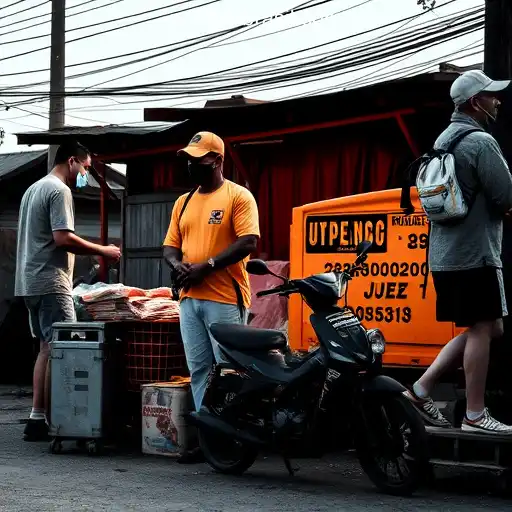
Understanding Jueteng: The Persistent Shadow Economy
Jueteng is a popular illicit numbers game in the Philippines, deeply entrenched in the nation's socio-political fabric. Despite numerous government crackdowns and legislative efforts to eradicate it, this game persists, symbolizing a complex web of economic necessity and cultural tradition. In this article, we'll explore the history, mechanics, and socio-cultural implications of Jueteng, and how it interacts with modern gaming trends like POPMEL Cassino online com bônus no Brasil💸.
Historical Background of Jueteng
The origins of Jueteng can be traced back to the Spanish colonial era in the Philippines. Initially influenced by the Chinese game "hueteng," it evolved into what is now a deeply ingrained practice in many Filipino communities. Traditionally, Jueteng involves bettors picking a combination of numbers from a range (usually 1 to 37), with winners determined by a random draw. This simplicity, combined with the ease of participation, has allowed Jueteng to thrive for generations.
Throughout the years, various administrations have attempted to combat Jueteng. However, the game has continuously resurfaced, driven by the lack of alternative economic opportunities in rural areas and its appeal to the low-income demographic that sees it as a means of survival or escape from poverty.
The Mechanics of Jueteng
Jueteng operates through a network of operators, collectors, and bettors. Collectors, often called "kubrador," roam neighborhoods to gather bets and document them. Betting can be as low as a few pesos, making it accessible even to the poorest sections of society. To the residents of many communities, these collectors are familiar faces, reinforcing the informal yet heavily organized nature of Jueteng.
The results are typically announced by coordinators using traditional word-of-mouth methods or, increasingly, via mobile phones and other digital means. The simplicity of the operation, combined with its flexible payout structure, makes Jueteng a preferred option for individuals who feel alienated from the formal economy.
Jueteng’s Social and Political Aspects
While it's easy to view Jueteng purely as an illegal gambling activity, its survival points to deeper social issues. In areas where basic public services are lacking, Jueteng plays the role of an unofficial welfare system. Community members often rely on Jueteng at critical times, such as when medical emergencies arise or school tuitions need to be paid.
Politically, Jueteng has garnered significant attention due to its continuous link to corruption scandals. Revenues from Jueteng often "trickle up" to local officials, police, and even national politicians, ensuring protection and continuity. This creates a shadow economy that complicates efforts to formalize governance structures, presenting a formidable barrier to anti-corruption campaigns.
The Digital Age: Jueteng and Online Gambling
In recent years, the landscape of gambling has been significantly reshaped by digital platforms. The rise of online casinos such as those offering POPMEL Cassino online com bônus no Brasil💸 showcases a new era where digital convenience meets traditional gaming desires. This shift offers insights into how Jueteng may evolve.
As more Filipinos gain access to the internet and mobile devices, there is potential for Jueteng to adopt online methods. The anonymity and wider reach of online betting could expand its influence, thus complicating efforts to monitor and regulate gambling activities. Additionally, the allure of online gaming with bonuses, as exemplified by entities like POPMEL Cassino, introduces stiff competition for traditional Jueteng, although it could also inspire modernization tactics among Jueteng operators seeking to maintain their customer base.
The Economic Implications
The economic dimension of Jueteng is multifaceted. On one hand, it circulates money within local economies, providing temporary economic relief to families involved. However, because it functions outside legal and tax systems, Jueteng does not contribute to broader economic development efforts or infrastructure investments.
Efforts to transition Jueteng into legalized versions, like the small-town lottery (STL), have met mixed results. Compliance, oversight, and trust remain significant hurdles. Thus, while legal alternatives exist, they fail to captivate the traditional Jueteng demographic, who may distrust government-run initiatives or face logistical challenges participating in them.
Conclusion: Jueteng’s Role in Future Policy
The persistence of Jueteng is indicative of its deep-rooted presence in Filipino society. Addressing this challenge requires not just punitive measures, but also a holistic approach engaging economic reform, community engagement, and transparency in governance. As new gambling trends like POPMEL Cassino online com bônus no Brasil💸 continue to emerge, there lies an opportunity to learn and adapt, paving potential pathways towards coalescing tradition with technology in ways that could yield mutually beneficial outcomes.